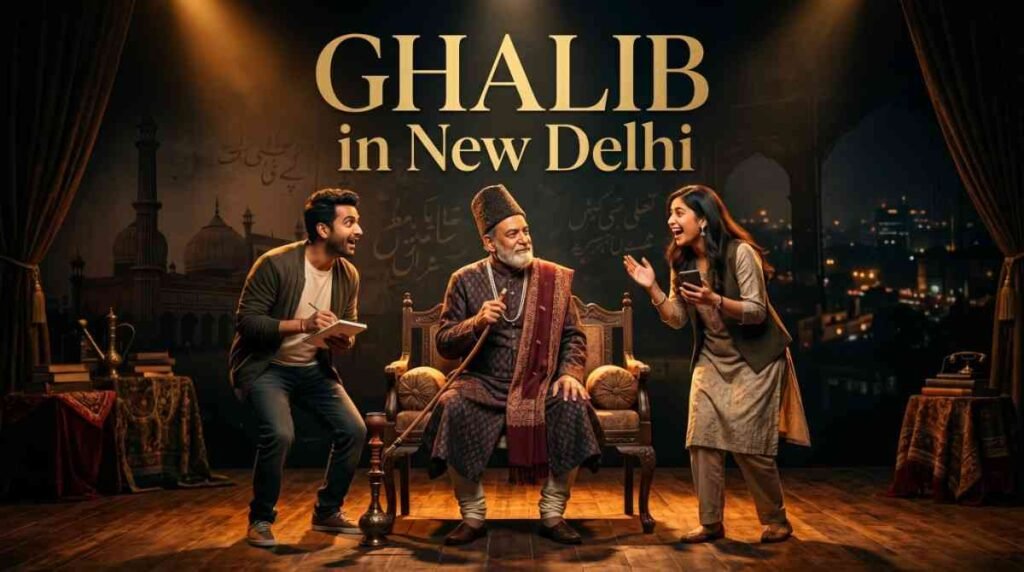
If you’ve lived in Delhi long enough, you know the city is a living contradiction. It’s a place where 14th-century ruins share a wall with 21st-century coworking spaces, and where the grace of Urdu shairi often competes with the cacophony of DTC bus horns. But what if the greatest poet of them all, Mirza Asadullah Khan Ghalib, were to suddenly reappear at a bus stand in 2026?
That is the hilarious, poignant, and deeply satirical premise of “Ghalib in New Delhi,” India’s longest-running comedy play. Produced by the legendary Pierrot’s Troupe and masterminded by Dr. M. Sayeed Alam, this play has become a cultural landmark in the capital. While it has graced many stages, its frequent home at the NCUI Auditorium near August Kranti Marg offers a unique experience that every Delhiite: and visitor: needs to witness at least once.
As a company that has spent over 50 years documenting and promoting the changing face of Delhi through outdoor media and integrated marketing, we at Graphisads have a front-row seat to the city’s evolution. And nothing captures that evolution quite like Ghalib trying to understand why a “servant quarter” in Greater Kailash costs more than a haveli in Ballimaran.
The Rebirth of a Legend (and the Culture Shock of a Lifetime)
The play begins with a twist that only the theatre can provide: Mirza Ghalib is reborn in modern-day Delhi. His second life doesn’t start in a palace, but at the ISBT (Inter-State Bus Terminus). From the moment he steps onto the smog-filled streets of the 21st century, the comedy writes itself.
Imagine Ghalib, a man who spoke in metaphors and lived for the refined air of the Mughal court, trying to navigate:
- The Language Barrier: His chaste Urdu is met with “Hinglish,” Gen-Z slang, and the aggressive “Dilli-isms” of the local landladies.
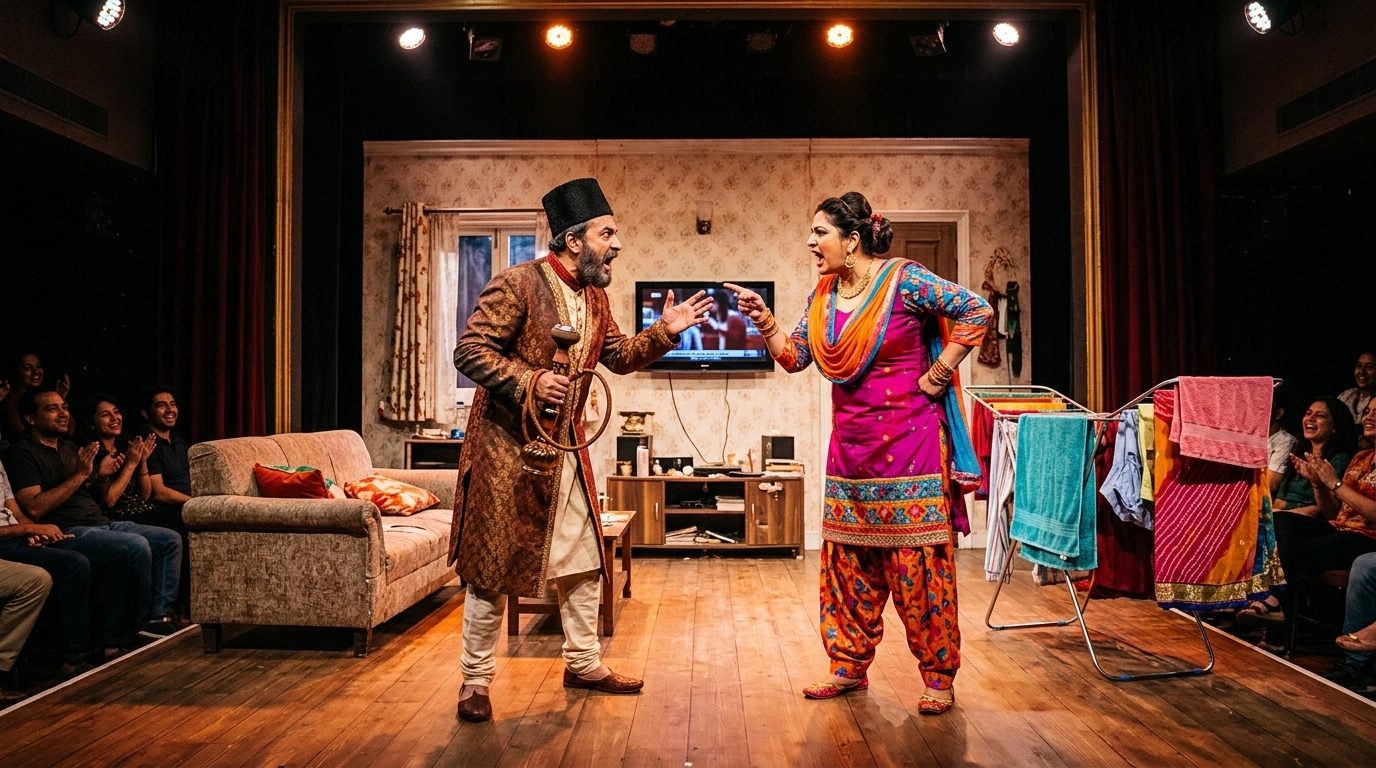
- The Living Crisis: He ends up sharing a cramped servant quarter with a student from Patna. The banter between the sophisticated poet and the pragmatic, UPSC-aspiring roommate is a masterclass in regional stereotypes and comedic timing.
- The Digital Age: Watching Ghalib try to comprehend social media, hashtags, and the concept of “going viral” is both heart-wrenching and hysterical.
Why “Ghalib in New Delhi” Has Run for 25+ Years
Since its debut in 1997, the play has seen over 500 shows. In an era where entertainment is consumed in 15-second reels, how does a 90-minute stage play remain so consistently popular?
The secret lies in the improvisation. Dr. M. Sayeed Alam, who often plays the lead role of Ghalib, is a genius at weaving current events into the script. Whether it’s a jab at the latest political scandal, the rising price of petrol, or the absurdity of New Delhi’s air quality index (AQI), the play stays fresh. It isn’t just a museum piece; it’s a living, breathing commentary on our daily lives.
For those of us in the advertising and communications industry, we see this as the ultimate form of “Dynamic Creative Optimization.” Just as we advise brands to keep their billboard messaging relevant and timely, Pierrot’s Troupe keeps Ghalib relevant by making him suffer through the same modern frustrations we all face.
The Brilliance of Pierrot’s Troupe
Formed in 1989, Pierrot’s Troupe is arguably one of India’s most prolific theatre groups. Their focus on historical figures: Ghalib, Maulana Azad, K.L. Saigal: has redefined the “biographical play” genre. However, “Ghalib in New Delhi” remains their most accessible work.
It breaks the “fourth wall” of high-brow theatre. You don’t need a PhD in Urdu literature to enjoy the play. You just need to have been stuck in Delhi traffic once to understand Ghalib’s pain. The troupe’s ability to use humor as a vehicle for social critique is a lesson for any marketer: if you want people to listen, make them laugh first.
Spotlight on the Venue: NCUI Auditorium
While the play has traveled to Mumbai, Bengaluru, and even internationally, there is something special about seeing it at the NCUI Auditorium. Located in the Siri Fort institutional area, NCUI (National Cooperative Union of India) is a hub for cultural exchange.
Why we love the NCUI Auditorium:
- Accessibility: It’s centrally located and well-connected to both South Delhi and Central Delhi.
- The Vibe: Unlike the massive stadiums, NCUI offers an intimate setting. You can see the micro-expressions on Ghalib’s face and the flamboyant gestures of the Punjabi landlady from almost any seat.
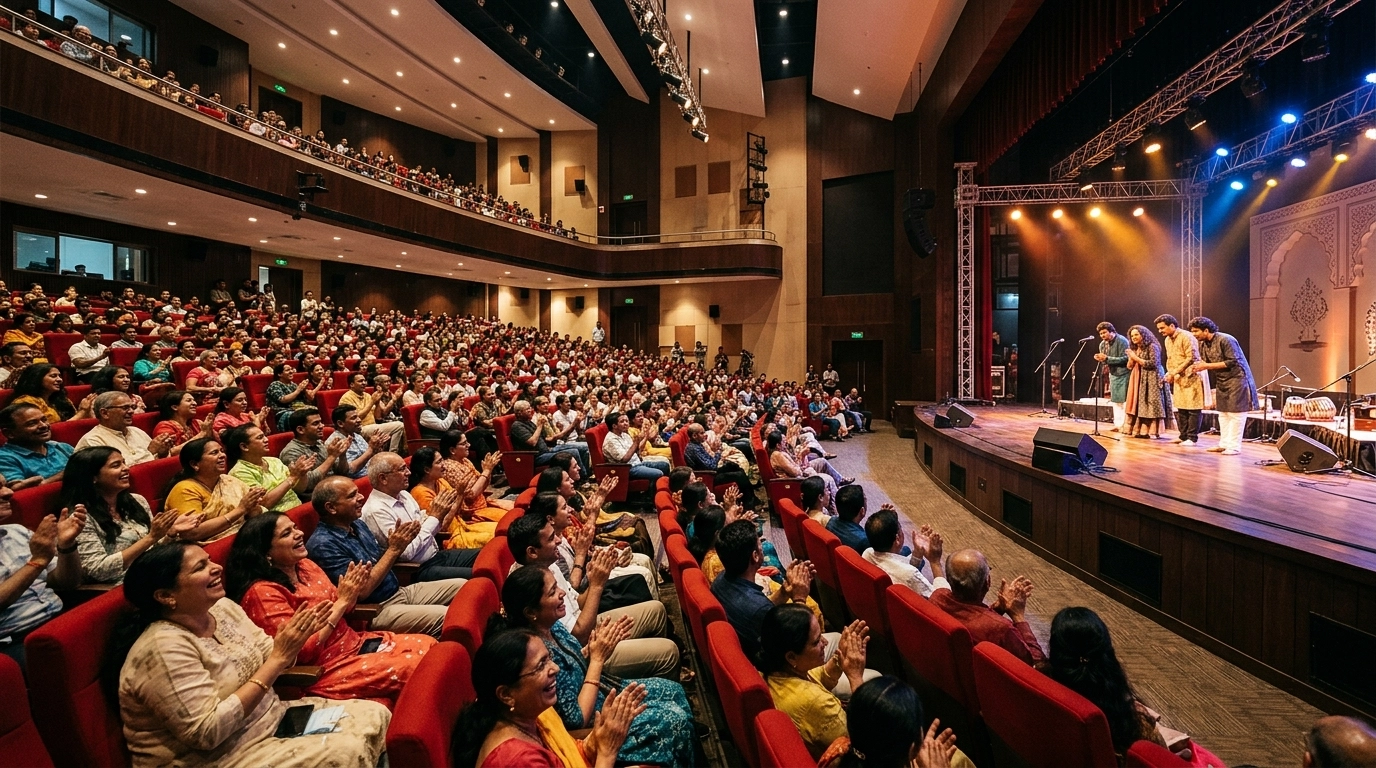
- Modern Amenities: It boasts excellent acoustics and comfortable seating, making it a preferred choice for high-end theatrical productions and corporate events alike.
At Graphisads, we often discuss the importance of sustainable event management. Seeing cultural venues like NCUI stay busy with such high-quality local productions is a win for the city’s creative ecosystem.
The “Graphisads” Perspective: Why Theatre Matters for Brands
You might wonder why a 50-year-old outdoor advertising agency is talking about 19th-century poets. The answer is simple: Stories are what sell.
Whether we are managing a pan-India metro branding campaign or promoting a government initiative, the goal is always to connect with the human experience. “Ghalib in New Delhi” does exactly that. It takes a historical icon and makes him a “brand” that modern audiences can relate to.
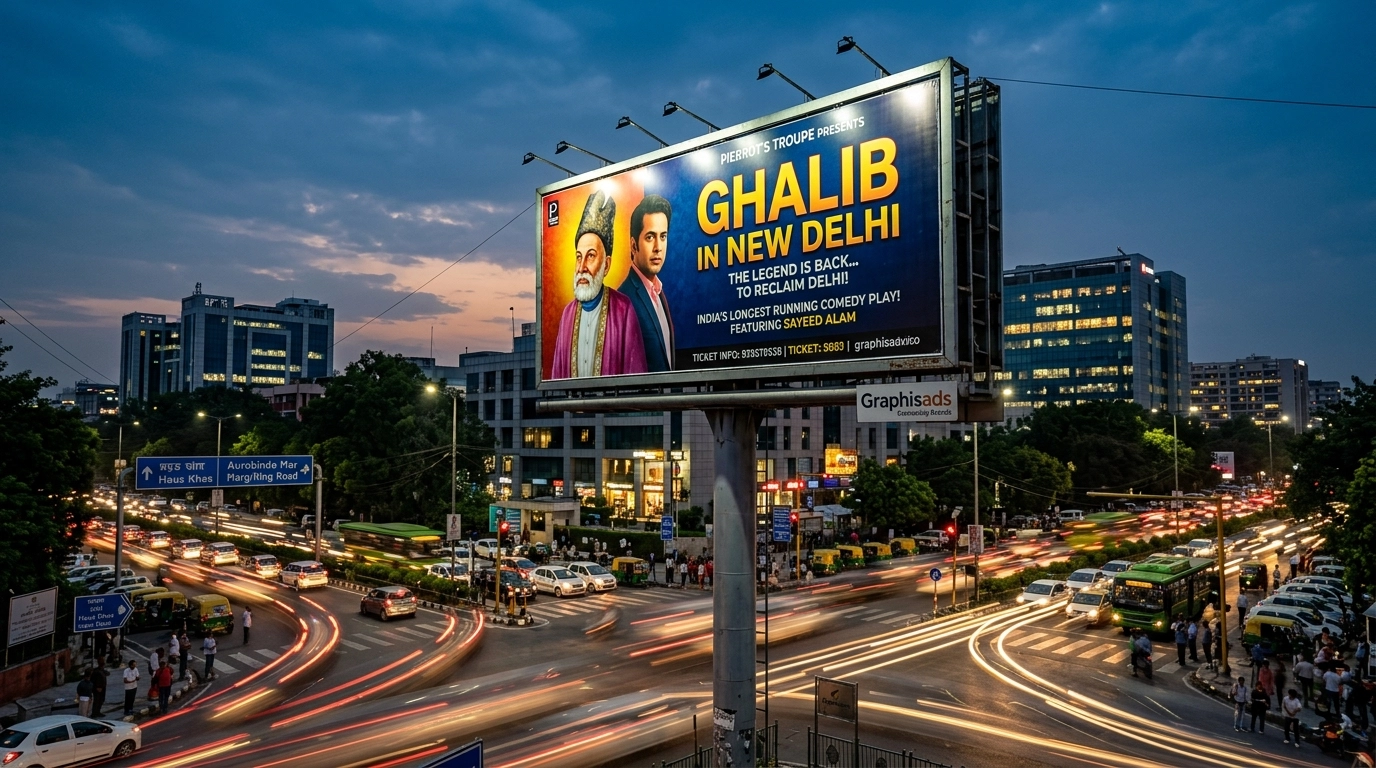
Furthermore, events like these are the heartbeat of the city’s outdoor landscape. When we see hoardings for Pierrot’s Troupe across Delhi, we see more than just an ad: we see the survival of the arts. We’ve always believed that adding OOH (Out-of-Home) to your media mix isn’t just about selling a product; it’s about claiming a space in the city’s collective consciousness.
What to Expect During the Show
If you’re planning to book tickets for the next show at NCUI (check platforms like BookMyShow for ET00085401), here’s a quick survival guide:
- The Language: It’s a mix of Urdu, Hindi, and English (Hindustani). Even if your Urdu is rusty, you’ll catch the drift through the brilliant physical comedy.
- The Duration: Usually about 1.5 to 2 hours. There’s rarely a dull moment.
- The Crowd-Work: Dr. Sayeed Alam is known to interact with the audience. If you’re sitting in the front row, be prepared to become part of Ghalib’s modern-day frustrations!
- Post-Show Eats: Being near the Siri Fort and August Kranti area means you’re just a stone’s throw away from Hauz Khas Village or Shahpur Jat for a post-theatre dinner.
Final Thoughts: A Poem for the Ages
In one of his famous couplets, Ghalib wrote:
“Poochte hain woh ki ‘Ghalib’ kaun hai,
Koi batlao ki hum batlayein kya?”
(They ask, ‘Who is this Ghalib?’ Someone tell them, for what can I say of myself?)
If Ghalib were alive today, he wouldn’t need to ask. He’d probably just point to a digital screen at a Delhi Metro station and say, “Check my Instagram.”
“Ghalib in New Delhi” is more than just a play; it’s a mirror. It shows us our own absurdities, our chaotic growth, and our enduring love for the language and culture that defines this city. If you want to see the soul of Delhi: old and new: clash in the most hilarious way possible, make your way to the NCUI Auditorium.